
CNM for Language

Language is a Network
At its core, language is a network – a system of relationships between ideas, expressions, and meanings – and that network overlays physical reality. When researchers are studying literature, very often they are limited to understanding it only from their own point of reference. CNM captures how different ways of speaking (across topics, disciplines, or even populations) often describe the same underlying truths but from different angles.
Two humans communicating, to clarify, learn or teach, often rephrase each other’s understanding, based on their own. By mimicking this human process of rephrasing and aligning across perspectives, CNM can connect the information within one language by the extension of the logic in another. When knowledge remains siloed within a single field, researchers can miss discoveries that become visible only when one discipline is interpreted through the structure of another.
CNM Uncovers Hidden Conceptual Structures
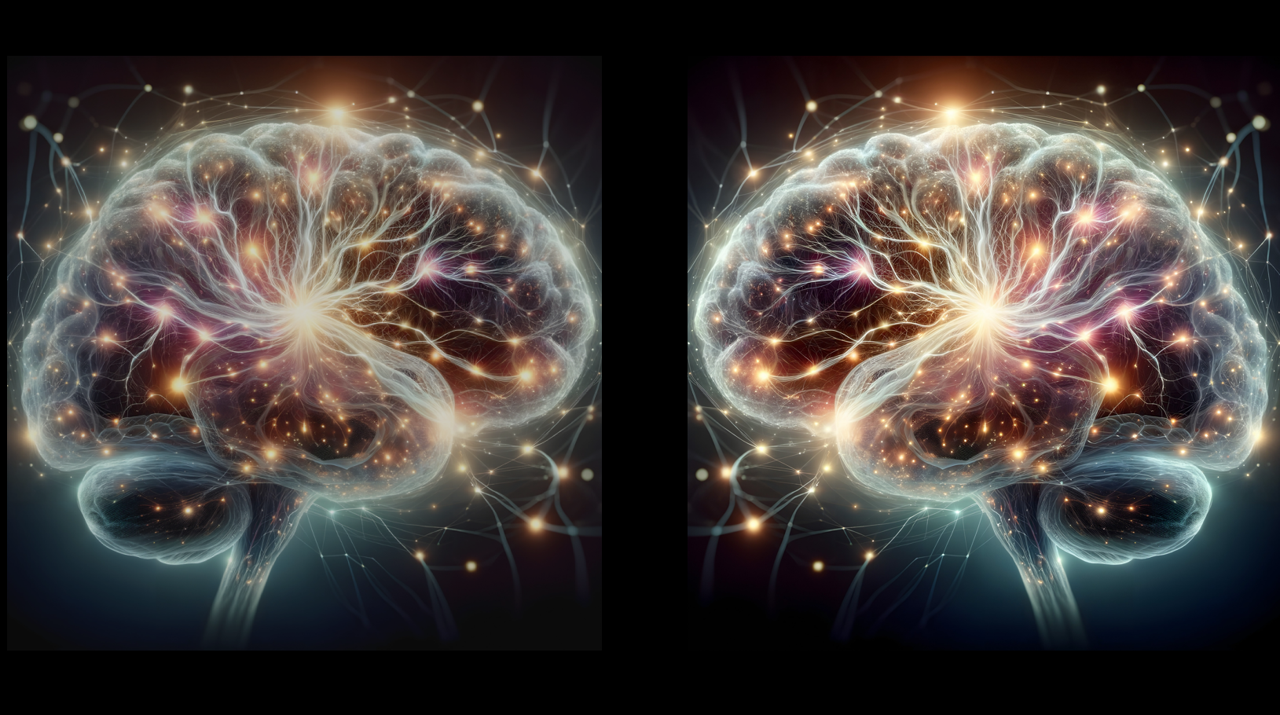
Just as people have unique relationships to words, large bodies of literature can develop their own unique languages. When two fields describe the same underlying reality in different ways, their differences can function like metaphors: they do not transfer everything from one domain to another, but they reveal new connections along the axis they share.
CNM uses the unique language of one dataset to rephrase the content of another, creating clusters of association in the starting dataset that are brought together by the rephrasing language. For example, CNM could allow an ophthalmologist to study ophthalmology literature grouped through the conceptual structure of oncology literature. The researcher can then examine the same body of literature from the perspective of multiple fields. Each language remains distinct, but becomes enriched by its relationship to the others.
CNM for Language Finds and Uses What Is Shared Beneath What Is Said
CNM for Language goes beyond conventional NLP by revealing the deep conceptual structure behind language: how ideas are organized, related, and reframed across contexts. Rather than connecting sentences and topics by keywords alone, CNM identifies the shared conceptual function beneath different ways of saying the same thing. By identifying structural meaning that generalizes across domains, CNM unlocks breakthroughs in cross-lingual understanding, semantic search, knowledge discovery, and context-aware systems.